Understanding iPhone Display Refresh Rates: ProMotion and Its Impact
Decoding iPhone Refresh Rates: A Guide to ProMotion
The refresh rate of a display, measured in Hertz (Hz), indicates how many times per second the screen updates its image. A higher refresh rate generally results in smoother animations and a more responsive feel. While many smartphones, particularly those running Android, have adopted high refresh rates, Apple's implementation, known as ProMotion, deserves closer examination.
Editor's pick: iPhone screen protectors on Amazon → As an Amazon Associate, this site earns from qualifying purchases.
What is ProMotion?
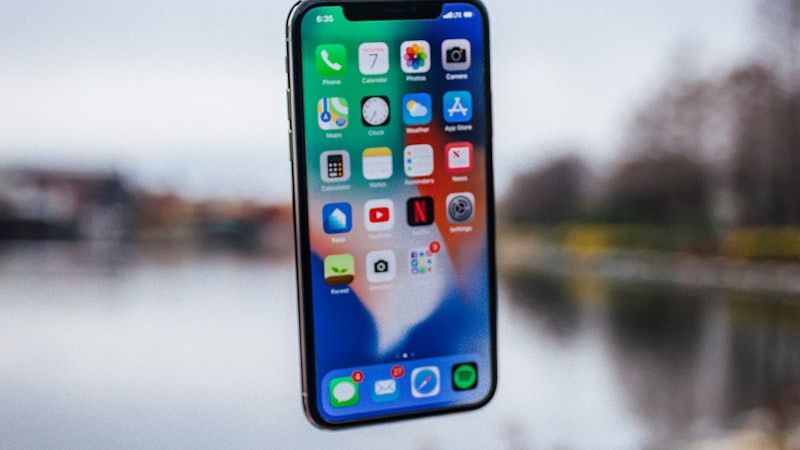
ProMotion is Apple's adaptive refresh rate technology, first introduced on the iPad Pro and later brought to the iPhone. Unlike fixed refresh rate displays, ProMotion dynamically adjusts the refresh rate based on the content being displayed. This means the screen can ramp up to a maximum refresh rate (typically 120Hz) for tasks like scrolling, gaming, and watching fast-paced videos, and then scale down to a lower refresh rate (as low as 10Hz) for static content like reading text or viewing photos.
Benefits of Adaptive Refresh Rates
The key advantage of ProMotion is its efficiency. By only using a high refresh rate when necessary, it helps to conserve battery life. A fixed 120Hz display constantly refreshes at that rate, consuming significantly more power than a display that can dynamically adjust. The visual benefits are also noticeable. The increased smoothness is particularly apparent when scrolling through web pages, navigating the user interface, and playing games that support high frame rates.
How ProMotion Works
ProMotion relies on sophisticated software and hardware integration. The iPhone's display driver constantly analyzes the on-screen content and determines the optimal refresh rate. This process happens in real-time, ensuring a seamless transition between different refresh rates. The display itself also needs to be capable of supporting variable refresh rates, which requires a more advanced panel technology.
Limitations and Considerations
While ProMotion offers numerous benefits, it's not without its limitations. One potential drawback is that the variable refresh rate can sometimes lead to subtle changes in perceived smoothness, although most users find this unnoticeable. Furthermore, some apps may not be fully optimized for ProMotion, potentially resulting in inconsistent refresh rates. Finally, the power saving benefits of ProMotion are most pronounced when viewing static content. During intensive tasks like gaming or video playback, the display will likely operate at its maximum refresh rate, consuming more power.
ProMotion and Battery Life: A Balancing Act
Ultimately, ProMotion strikes a balance between visual smoothness and battery life. By intelligently adjusting the refresh rate, it delivers a premium visual experience without significantly impacting battery performance. However, users who prioritize battery life above all else can disable ProMotion on some iPhone models, effectively locking the display at a fixed refresh rate (typically 60Hz). This can be done in the iPhone's settings menu under Accessibility > Motion > Limit Frame Rate.
Future of Refresh Rates on iPhone
Industry trends suggest that adaptive refresh rate technology will continue to evolve. We can expect to see further refinements in the algorithms that control refresh rate adjustments, as well as improvements in display panel technology that allow for even wider ranges of refresh rates. As we explored in our analysis of display technology at iPhone View (https://iphoneview.com), advances in OLED materials and display driver technology are crucial for enabling more efficient and dynamic refresh rate control.
For iPhone users, understanding the benefits and limitations of ProMotion can help them make informed decisions about their display settings and optimize their overall user experience.
Questions readers ask
What's the biggest tradeoff Apple has to swallow for display refresh rates promotion?
Every Apple decision is a tradeoff, and the obvious one here is internal volume. Adding display refresh rates promotion costs millimetres somewhere — usually battery capacity or camera module depth — and Apple has to decide which line item to trim.
What does display refresh rates promotion actually cost — in price, weight, or battery?
Expect a premium of roughly $200–300 over the standard model, plus a small weight penalty. Battery life is the bigger variable — early prototypes typically trade an hour or two of screen-on time for the new capability, then claw it back over a generation.
How does display refresh rates promotion change the upgrade calculus for existing owners?
Existing owners weigh display refresh rates promotion against the upgrade they were already planning. If the feature is meaningful for daily use, it pulls forward upgrades by about a year; if it is novelty, it shifts nothing.
Does display refresh rates promotion require new developer APIs, or can existing apps adapt?
Apple historically ships a quiet developer API the year before the hardware lands, so existing apps that follow human-interface guidelines should adapt with modest work. Apps that hard-code layouts will need updates.
In short — what's the takeaway on what is promotion??
It comes back to whether Apple can ship display refresh rates promotion without compromising the parts of the iPhone people already pay for. The detail in this section is where that case is made or broken.